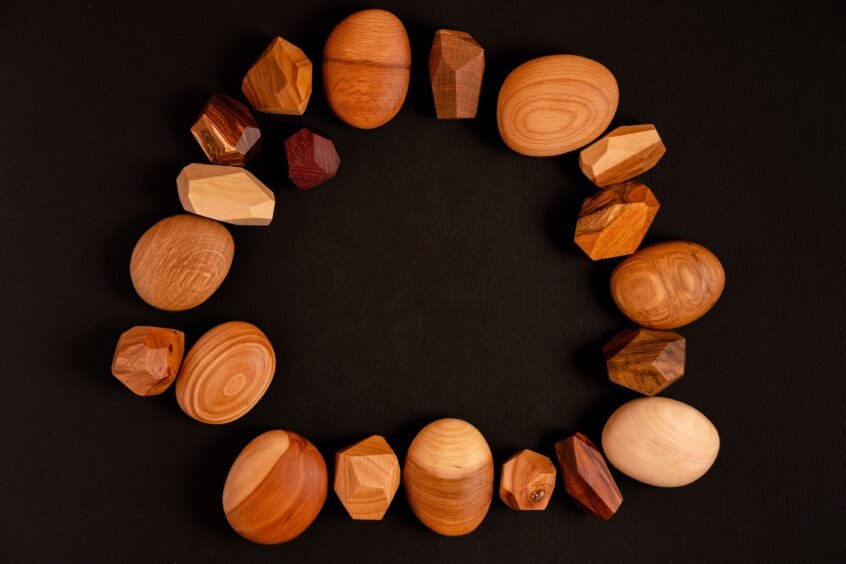
As human beings, we are surprisingly alike, no matter where we live or originate from, and yet in some ways we can be quite different. Perhaps the most obvious differences are between men and women, where many, most, or perhaps all of us struggle to understand the opposite gender. And yet, despite the obvious variations, we remain the same in essence.
Celebration
We all differ from one another in a variety of ways that have little, if any, connection with gender. In some circumstances, those things that make us different can be a challenge, such as at school, where our peers may pick up on anything about us that does not conform to how they are. Similarly, in military life, being a team player trumps individuality, such that differences aren’t encouraged but rather suppressed.
And yet, generally, our differences are something to celebrate – “thank you, Lord, that you haven’t created us to all be the same, identical; you have made us varied and interesting”. Admittedly, those variations can be challenging, both to ourselves personally and to others. We often struggle with people who are markedly different to us, either because we don’t quite understand them, or because of envy, recognising that we don’t have their strengths, skills or aptitudes, or perhaps seeing that they aren’t hampered by those things that seem to inhibit us.
Dyslexia
Early on in our son’s school days, Jean and I recognised that he was beginning to struggle, and that he had certain traits that weren’t common. Jean came across an article about dyslexia in a magazine, which listed a range of dyslexic characteristics, several of which we recognised in our son. This explained the difficulties that he was encountering, which was helpful, but also highlighted that he had a problem. As we discovered more about this condition, we came across the story of an architect in the USA who was himself dyslexic. This man led his own professional practice, in which there were a number of other architects, but he made it a rule to employ only those who were also dyslexic. This wasn’t from altruism, but rather because he recognised that those with this characteristic had greater spatial awareness and were therefore better architects. What to many can be viewed as a disadvantage becomes, in the right circumstances, a strong asset. Many people who are neurodiverse, which brings a challenge to integration with others or to learning in a standard environment, also have significant strengths, often being high performers in the academic sphere or in their professional lives.
Limitations
All of us have vulnerabilities of one sort or another, and also strengths – although we may not recognise those. Many people more readily appreciate their weaknesses than their advantages, but it has to be admitted that some have this the opposite way around. Such differences are all part of the variety of characteristics that make us human beings different from one another – some things that are definitely to be celebrated, and others not so much perhaps.
I rejoice in some of the strengths and abilities that others have, that I don’t. I have written before about the paintings that I have obtained to enhance our home. These are works of art that I can’t aspire to producing, some of which astonish me in the level of skill that is evident. I also recognise the beauty and artistry displayed in classical music, whether in the composing or the playing of it. There are many areas of creativity, in the broader sense of that term, that we can enjoy and admire, even while recognising that we lack the ability to create such things ourselves.
Variety
On the other hand, there are attributes that we may have that most others are not endowed with. We need to appreciate that this diversity is also reflected in the spiritual realm. We are not all meant to be the same, other than that we should seek to be like Jesus in character (Romans 8:29). We are all called to serve God, but in varying ways, as the Spirit of God enables and empowers us. For all of our variety, there is a place for each of us within God’s purposes (Ephesians 2:10). The apostle Paul’s illustration of the human body is truly apt – we all have different functions, but all are also essential. If any part is not functioning as it is designed to, then the whole body suffers. Paul goes on to emphasise that it is pointless trying to be a different part from that which God has assigned; if all were an eye, where would the sense of hearing come from, etc.(1 Corinthians 12:14-20). What we can be sure of is that we are not a spare part, surplus to God’s requirements. Although it must be admitted that that doesn’t always apply within the local church, perhaps due to the shortcomings of others. But even then, we are the servants of God himself, and if there seems to be no place for us to function according to our gifting within the local body, that doesn’t mean that God cannot, or will not, use us; it just won’t be in quite the way that we might have anticipated. We need to understand that it is God whom we serve and not any human structure. Yes, of course we are called to serve the local church, but we serve him through doing so, and serving him is not dependent upon any recognised role that we do or don’t have within the local body.
Surrender
We are all different, and whatever strengths or weaknesses we may feel that we have, God will use these to his glory if we place them into his hands. That is the key to a fulfilling and purposeful Christian life. Fretting about our limitations, or whatever inadequacies we may feel, will not bless us. Neither will envy of others for what appear to be their strengths. At the end of the day, it is only what is surrendered to God that will give us true purpose and fulfilment. And, as we probably all realise, whatever strengths we feel we have, if these are not surrendered, then they cannot be of true value in the service of God. Service isn’t what we decide to do, but what he calls us to do, and with him there is no limitation. This is the wonderful thing about the gifts and anointing of the Holy Spirit – he does not rely upon our natural strengths, nor is he constrained by our human limitations; when the hand of God is upon us, then the power of God is as well.
I encourage you to be honest with yourself about your limitations and your strengths, and to submit these to God to use as he may. Our lives need to be submitted to him, but that includes the details of who we are, and how we feel about ourselves. Only then can he pick us up and use us as tools in his hands, guided and empowered by his Spirit. See Romans 12:3-8
.
Please use the Leave a Reply form below to subscribe to receive weekly email notifications and links to the latest BLOG topic. Include “SUBSCRIBE” in the Comment field.