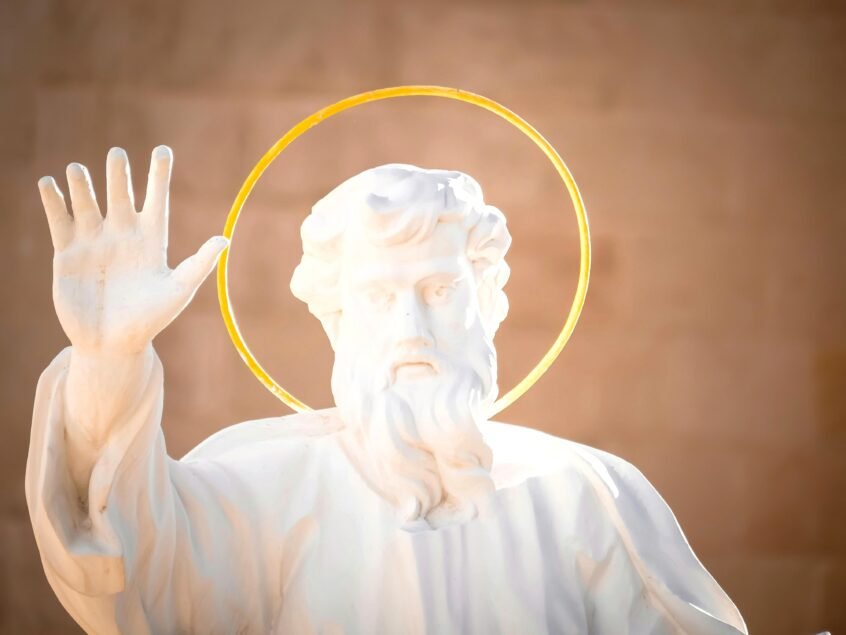
One of my earliest preaching assignments was at the culmination of an evangelistic mission while studying at Bible College. I selected Acts 17:23 as my text, the story of when Paul was in Athens and was brought before the Areopagus to explain his teaching about Jesus to the philosophers who met there. Paul was very wise in how he approached this task, as his audience was from a completely different background and was likely to have little knowledge of the Jewish faith, and even less sympathy with it. Paul started out by referring to what they were very familiar with: the multitude of objects of worship located around the city. He then highlighted the one about which there was less clarity, an altar to the God who was unknown.
Unknown
Bible translators describe this in various ways, including: ‘An Unknown God’, ‘The Unknown God’, and ‘God the Unknown’. There may seem to be little difference between these three translations, but actually, the first version is more random and arbitrary than the other two, both of which suggest that there definitely is such a deity – and only one. Paul went on to speak to them about the unknown God whom they acknowledged, and to outline to them who he is, so that he would no longer be unknown to them.
Tamed!
We, of course, know who this God is; we have a whole library of books (the Bible) that tell us about him. We also have the Spirit of God who dwells with us, speaks to us and reveals things about God. But I want to suggest that all of this understanding, along with our experience of knowing God personally, can lead us to think that we have got God tamed. Although we will all admit to having questions, we also have an inclination towards bringing God down to earth – seeking to create an understanding of him, and of spiritual realities generally, based on our limited, earthly perspectives. I suggest that this is a very hazardous, not to mention presumptuous, approach.
Faith
It is my belief that God is so otherworldly that we can neither understand him, appreciate the context of heaven, nor realistically grasp the full spiritual circumstance for our earthly existence. The realities that are less than clear, which we find indicated in scripture, need to be taken on faith. When we attempt to bring such things down to earth, we are effectively attempting to bring the divine to the level of the temporal. The Bible reveals enough about God for us to worship and serve him meaningfully, but it also leaves us plenty of scope for trusting him with those things that are unknowable now. Jesus made it very clear that neither he nor the angels in heaven knew when the current time would come to an end (Mark 13:32). He gave us indications to look out for, but I suggest that these were to encourage faith and perseverance, rather than to provide a timeline of events. We should anticipate the context for our heavenly existence in a similar way – this is not clear from the Bible; all we know is that there is life after death, new life and a new existence within a totally different environment.
Unfocused
How do we get to have a greater realism about those spiritual matters that are unclear from scripture? I think that we are safe to assume that those things God has not revealed are things that we do not need to know. Also, he has not shown us anything that we are incapable of grasping now. I am not referring here to any intellectual limitation on our part, but to an experiential one. We are earth-bound in our thinking, our understanding and our awareness. God is God and, as long as we remain in the flesh, we are largely blind to the spiritual realities, the realm that God inhabits. But that is OK. We don’t need to have such understanding, as explained by Paul in 1 Corinthians 13:12:
“For now we see in a mirror dimly, but then face to face. Now I know in part; then I shall know fully, even as I have been fully known.”
In understanding this verse, we need to appreciate that mirrors in Paul’s day had nothing like the clarity that we are accustomed to today; they provided only a poor, dim, unfocused reflection.
Uncertainty
As humans, we seek clarity, but God looks for trust amidst our uncertainty. It is within our nature to look for explanations, but God has left us with many unanswered questions, so that we might trust him all the more. We have been afforded clarity only on the things that we need to know. Maybe he is looking for our faithfulness in these things so that we will be ready, when the time comes, for the things that are, as yet, unexplained. Certainly, he wants us to have an attitude of heart that submits to his will and purpose for us, that seeks above all to honour and serve him. The other-worldly things that fascinate us can wait; what can’t be delayed is faithfulness to his revealed Word now, today.
Current state
We started out considering Paul’s approach to explaining the truths of Christian faith to the philosophers in Athens; he was seeking to reveal to them truths that belonged to a foreign context to their own. In doing so, he related his message directly to their own situation. We need to appreciate that God has applied a similar approach in explaining spiritual realities to us. We have an earthly context, and spiritual truth has been explained to us from this perspective. However, spiritual realities reside within a different, heavenly one that we are not currently capable of fully grasping. Rather than seeking to manipulate scripture to make spiritual realities definable, graspable, and tameable, let’s be those who focus upon what has been made clearly known, the things that apply directly to our current state. (See 1 Timothy chapter one).
Instead of spending our energies looking for answers for what is unanswerable to us today, let us be those who take to heart God’s purpose for our lives, seeking with all our energies to be obedient to his calling upon us, obeying what Jesus declared are the greatest commandments:
“And you shall love the Lord your God with all your heart and with all your soul and with all your mind and with all your strength.” and “You shall love your neighbour as yourself.” (Mark 12:30,31a)
God has given us a lifetime to grasp the importance of those and to endeavour to be wholehearted in putting them into practice (James 2:14-17). But anything beyond these is at best secondary and can certainly wait for God’s time.
Please use the Leave a Reply form below to subscribe to receive weekly email notifications and links to the latest BLOG topic. Include “SUBSCRIBE” in the Comment field.
.